
Agent to Agent Testing Platform vs Pathoura
Side-by-side comparison to help you choose the right tool.

Agent to Agent Testing Platform
Validate AI agent behavior across chat, voice, and phone platforms to ensure security, compliance, and performance.
Last updated: February 28, 2026

Pathoura
Pathoura offers AI-powered multilingual audio guides that enrich museum visits directly on visitors' smartphones.
Last updated: March 1, 2026
Visual Comparison
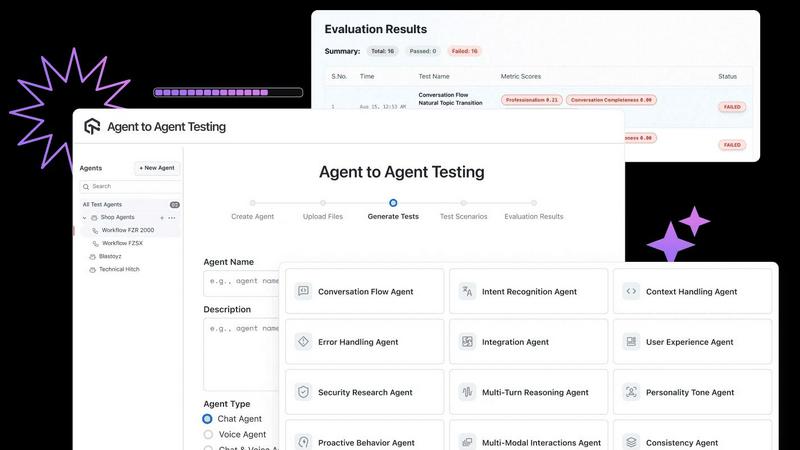
Agent to Agent Testing Platform
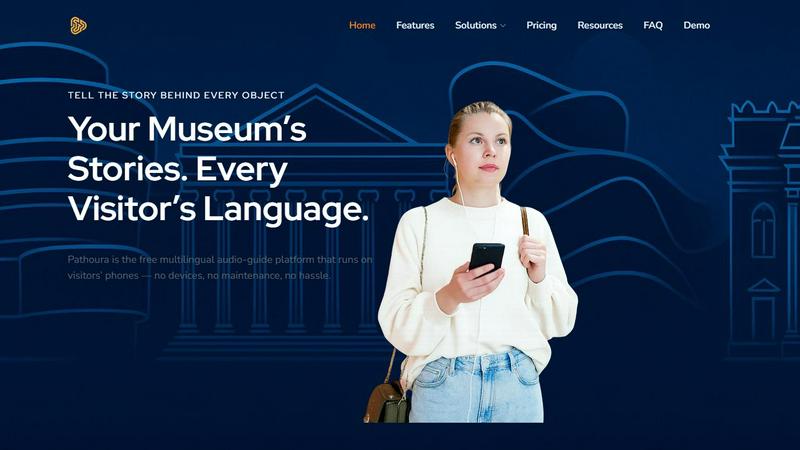
Pathoura
Feature Comparison
Agent to Agent Testing Platform
Automated Scenario Generation
The platform automates the creation of diverse test scenarios tailored for AI agents, simulating real-world interactions across chat, voice, and hybrid environments. This feature ensures extensive coverage of potential user interactions.
True Multi-Modal Understanding
Agent to Agent Testing Platform goes beyond textual inputs, allowing users to define detailed requirements or upload product requirement documents (PRDs) for various media types, including images, audio, and video, thereby reflecting real-world complexities.
Autonomous Test Scenario Generation
With access to a library of hundreds of predefined scenarios, users can also create custom testing scenarios. This flexibility helps evaluate agents based on specific attributes, such as personality tone and intent recognition.
Diverse Persona Testing
To emulate authentic user behavior, the platform incorporates various personas—like International Caller and Digital Novice—ensuring that AI agents are rigorously tested across different user types and interaction styles.
Pathoura
AI-Powered Multilingual Audio Guides
Pathoura offers advanced AI translation capabilities that adapt text and narration scripts into over 20 languages. This feature ensures that interpretation remains clear, accessible, and easy to manage, allowing institutions to reach a global audience effectively.
Easy-to-Use Web Dashboard
The platform’s intuitive dashboard empowers museums to create and manage audio guides effortlessly. Users can upload exhibit titles, stories, and images, organize content by zones or themes, and have their audio guides ready for visitors in just a few minutes.
QR Code Access for Visitors
Visitors can easily access audio guides by scanning QR codes or entering exhibit numbers on their smartphones. This hassle-free experience eliminates the need for app downloads or special devices and allows for immediate listening.
Built-In Monetization Options
Pathoura includes features that enable museums to generate revenue through audio guide monetization. This empowers institutions to create sustainable funding avenues while delivering compelling storytelling experiences to their visitors.
Use Cases
Agent to Agent Testing Platform
Quality Assurance for Chatbots
Businesses can use this platform to rigorously test chatbots, ensuring they respond accurately and appropriately in diverse conversational contexts, thus enhancing user engagement and satisfaction.
Voice Assistant Validation
Organizations deploying voice assistants can leverage the platform to identify and rectify potential issues, such as misinterpretation of commands or inappropriate responses, ensuring a seamless user experience.
Phone Interaction Testing
For companies utilizing AI phone caller agents, the platform facilitates comprehensive testing of call handling, enabling them to assess the agents' effectiveness in managing voice interactions under varied scenarios.
Comprehensive Risk Assessment
Enterprises can perform end-to-end regression testing on their AI agents, utilizing insights from risk scoring to prioritize critical issues, thereby optimizing their overall testing strategy and resource allocation.
Pathoura
Museum Tours
Pathoura is perfect for museums looking to enhance their visitor engagement with rich, multilingual audio guides. Institutions can provide in-depth narratives for each exhibit, making art and history more accessible.
Gallery Exhibitions
Art galleries can utilize Pathoura to create audio guides that accompany their exhibitions. Curators can share insights, artist interviews, and background information, enriching the viewer's experience.
Heritage Sites
Heritage sites can adopt Pathoura to guide visitors through historical landmarks. The platform’s multilingual capabilities ensure that tourists from different backgrounds can appreciate the significance of cultural sites.
Educational Programs
Educational institutions can leverage Pathoura for school trips, providing students with interactive audio guides that align with their curriculum. This approach fosters a deeper understanding of the subject matter in an engaging manner.
Overview
About Agent to Agent Testing Platform
Agent to Agent Testing Platform is a pioneering AI-native quality assurance framework specifically designed to validate the behavior of AI agents in real-world scenarios. As AI systems evolve towards greater autonomy, traditional QA methodologies that are tailored for static software become inadequate. This platform addresses this gap by offering a robust testing environment that evaluates multi-turn conversations across various modalities, including chat, voice, and phone interactions. Enterprises can leverage this platform to ensure their AI agents meet high standards of performance and reliability before they are deployed into production. It introduces an innovative assurance layer that utilizes multi-agent test generation, employing over 17 specialized AI agents to identify long-tail failures, edge cases, and interaction patterns that manual testing often overlooks. This comprehensive testing approach is essential for businesses aiming to enhance their AI solutions while minimizing risks associated with deployment.
About Pathoura
Pathoura is a groundbreaking audio-guide platform specifically designed for museums, galleries, and heritage sites aiming to elevate visitor experiences through high-quality, multilingual audio guides. This innovative solution addresses the challenges posed by traditional audio-guide systems that often involve high costs and complicated setups. With Pathoura, cultural institutions can effortlessly create and manage immersive tours through an intuitive web dashboard. Institutions can upload exhibit information, images, and organize visitor routes with ease. By leveraging cutting-edge AI technology, Pathoura offers natural-sounding narration in over 20 languages, allowing museums to connect with diverse audiences affordably. Visitors can access audio guides via simple QR codes or shared links, removing the need for hardware distribution or maintenance. Additionally, built-in monetization options empower museums to generate sustainable revenue while crafting enriching storytelling experiences. Pathoura caters to institutions of all sizes, ensuring a user-friendly, scalable, and eco-friendly solution for modern cultural engagement.
Frequently Asked Questions
Agent to Agent Testing Platform FAQ
What types of AI agents can be tested with this platform?
The platform supports a wide range of AI agents, including chatbots, voice assistants, and phone caller agents, allowing comprehensive testing across various interaction modalities.
How does the platform ensure the accuracy of test results?
The Agent to Agent Testing Platform employs over 17 specialized AI agents to simulate diverse interactions, ensuring that it captures edge cases and long-tail failures that manual testing might miss.
Can I integrate this testing platform with existing CI/CD workflows?
Yes, the platform seamlessly integrates with CI/CD workflows, enhancing test orchestration and allowing businesses to execute tests at scale with minimal setup.
Is there support for creating custom test scenarios?
Absolutely! Users can access a library of predefined scenarios and also create customized test scenarios to meet specific testing needs, ensuring thorough evaluation of AI agents.
Pathoura FAQ
How does Pathoura create audio guides?
Pathoura simplifies the process of creating audio guides by allowing users to upload exhibit information directly into the platform. The AI then translates and narrates the content, making it accessible in multiple languages.
Can visitors use their own smartphones for audio guides?
Yes! Pathoura is designed for visitors to use their smartphones to access audio guides. This eliminates the need for additional hardware and maintenance, enhancing convenience for both the institution and its visitors.
How many languages does Pathoura support?
Pathoura supports audio narration in over 20 languages, making it easy for museums and cultural institutions to connect with a diverse audience and provide inclusive experiences.
What are the monetization options available?
Pathoura offers built-in monetization features that allow museums to generate revenue through their audio guides. Institutions can create subscription models or sell individual guide access, providing sustainable funding opportunities.
Alternatives
Agent to Agent Testing Platform Alternatives
The Agent to Agent Testing Platform belongs to the innovative category of AI Assistants, specifically designed to validate the behavior of AI agents across various modalities such as chat, voice, and phone interactions. This cutting-edge platform addresses the need for comprehensive quality assurance in an era where AI agents are becoming increasingly autonomous and complex. Users often seek alternatives due to factors like pricing, specific feature sets, and integration compatibility with existing systems. When exploring alternatives, it's essential to consider aspects such as the depth of testing capabilities, scalability, and the ability to address unique compliance and security requirements effectively.
Pathoura Alternatives
Pathoura is an innovative audio-guide platform designed specifically for museums, galleries, and heritage sites, utilizing AI technology to provide multilingual audio tours directly to visitors' smartphones. As institutions seek to elevate their visitor experiences, many users often explore alternatives due to factors such as pricing, feature sets, and specific platform requirements that may align better with their unique needs. When searching for alternatives, it is essential to consider the ease of use, customization options, and the ability to provide multilingual support. Institutions should also evaluate how well the alternative integrates with existing systems and its potential for generating revenue through monetization features. A user-friendly interface and robust support for content management are also vital for a seamless transition and ongoing operation.