
Deeploy vs Fusedash
Side-by-side comparison to help you choose the right tool.

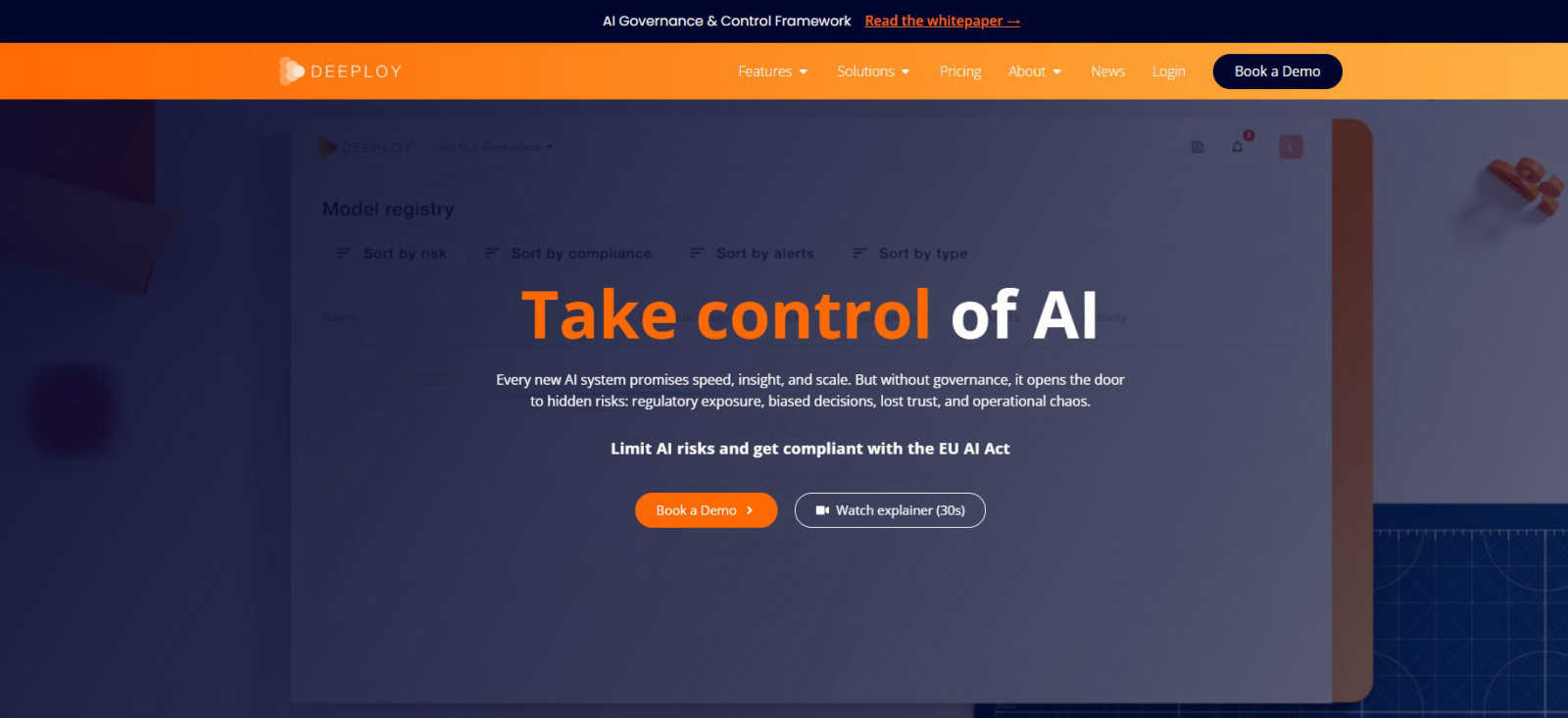
Deeploy is the essential AI governance platform for controlling risk and scaling confidently.
Last updated: March 1, 2026

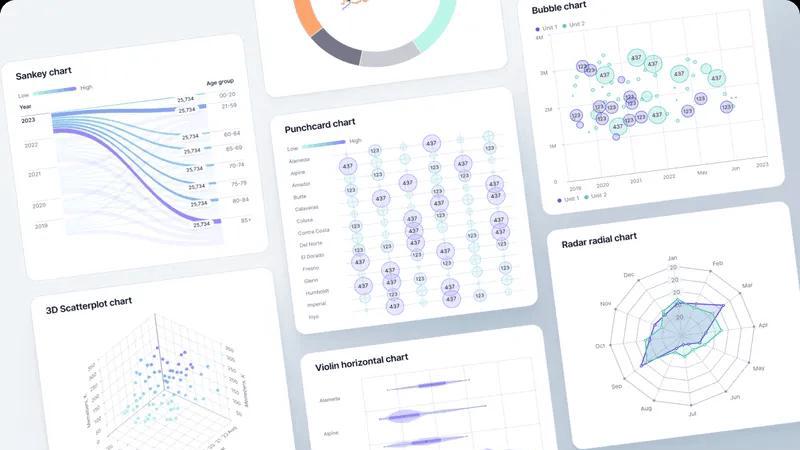
Fusedash transforms raw data into interactive dashboards and charts, enabling teams to act on insights instantly.
Last updated: March 4, 2026
Visual Comparison
Deeploy
Fusedash
Feature Comparison
Deeploy
AI Discovery and Onboarding
Gain complete visibility across your entire AI landscape with Deeploy's powerful discovery engine. This feature allows you to automatically discover, onboard, and manage every AI system in your organization from a single, unified interface. Connect any MLOps or GenAI platform to eliminate dangerous blind spots and establish centralized control without the need for costly and complex migration projects, ensuring you know exactly what AI is running where.
Control Frameworks
Navigate the complex web of AI regulations with confidence using Deeploy's guided control frameworks. Choose from default, pre-built frameworks like ISO 42001 and NIST AI RMF, or build your own custom set of rules. This feature enables you to classify AI system risk levels in minutes and establish clear accountability with structured approval processes, making compliance straightforward and manageable instead of a manual, error-prone nightmare.
Control Implementation
Turn high-level governance policies into enforceable, engineer-friendly controls. Deeploy automatically assigns the right requirements to every AI system without manual work, giving technical teams clear, actionable tasks. Accelerate compliance by up to 90% using pre-built templates and automatically collected evidence, and let AI-powered assessments handle the repetitive work of validation and documentation.
Real-Time Monitoring
Prevent costly AI incidents before they happen with Deeploy's proactive, real-time monitoring suite. Get instant alerts for critical issues like model drift, performance degradation, or output anomalies. This feature allows you to identify errors before your users do and add essential tracing and guardrails to protect Large Language Model (LLM) outputs, ensuring systems perform as intended and within defined ethical boundaries.
Fusedash
Flexible Views
Fusedash offers the ability to create tailored dashboard views for different audiences. Teams can transform the same dataset into various formats, including dashboards, charts, maps, and report-style views. This customization allows stakeholders to focus on what matters most without the need for lengthy back-and-forth discussions, improving clarity and efficiency.
AI Chart Generator
The AI Chart Generator within Fusedash allows users to create visually appealing and informative charts quickly from CSV files or APIs. This feature enables users to select the most appropriate chart type, apply comparisons, and refine labels, ensuring that each visual effectively communicates the intended story. Charts can be easily integrated into dashboards or used as standalone visuals for reporting purposes.
Dashboard Software
Fusedash provides a comprehensive workspace for building dashboards and reports. This feature allows users to combine performance metrics with narrative insights, providing critical context that explains changes in data. By blending monitoring and storytelling, Fusedash helps teams stay aligned and minimizes the risk of conflicting reports, ensuring everyone is on the same page.
AI Chat
The AI Chat feature enhances user experience by enabling plain language queries about data. Users can ask questions, explore various breakdowns, and receive suggestions for the best metrics and visualizations. This intuitive interaction allows teams to quickly turn insights into shareable dashboard views, making data exploration more accessible and efficient.
Use Cases
Deeploy
Financial Services Compliance
For banks and fintechs, Deeploy is the frontline defense against regulatory risk. It provides the immutable audit trails, real-time model monitoring, and explainability required to meet stringent financial regulations. Organizations can prove their credit-scoring or fraud detection models are fair, unbiased, and compliant, scaling AI-driven innovation without exposing the business to massive fines or reputational damage.
Healthcare AI Safety
In sensitive fields like mental and physical healthcare, Deeploy enables the safe adoption of AI. It provides the crucial explainability and expert-in-the-loop feedback mechanisms needed to validate AI-assisted diagnoses or treatment recommendations. This ensures AI augments care responsibly, building patient and practitioner trust while maintaining strict adherence to medical ethics and data privacy standards like HIPAA.
Manufacturing & Supply Chain Optimization
Manufacturers using AI for predictive maintenance, quality control, or supply chain logistics use Deeploy to ensure reliability and traceability. The platform offers observability for both technical and non-technical teams, allowing continuous improvement managers to understand AI reasoning and provide feedback. This turns AI from a black-box tool into a transparent, continuously improving asset integral to production processes.
Enterprise-Wide AI Portfolio Management
Large enterprises with AI scattered across dozens of teams and vendors use Deeploy to regain control. It creates a central registry of all AI assets, applies consistent governance frameworks, and automates evidence collection for audits. This use case transforms AI from an unmanageable jungle into a compliant, high-value portfolio, enabling leadership to scale initiatives with confidence and clear oversight.
Fusedash
Marketing Analytics
Marketing teams can leverage Fusedash to visualize campaign performance metrics and track KPIs in real-time. By creating tailored dashboards, they can analyze customer engagement, conversion rates, and ROI, enabling data-driven decision-making that optimizes marketing strategies.
Sales Performance Monitoring
Sales teams can utilize Fusedash to monitor their performance metrics and identify trends in sales data. By using interactive dashboards, they can gain insights into sales cycles, customer segmentation, and territory performance, helping them make informed decisions that drive growth.
Financial Reporting
Finance departments can benefit from Fusedash by creating detailed financial reports that incorporate real-time data. With the ability to define consistent metrics, they can ensure accuracy in reporting, analyze trends over time, and present findings to stakeholders with clarity and context.
Operational Efficiency Tracking
Operations teams can use Fusedash to track efficiency metrics and monitor key performance indicators. By visualizing operational data, they can identify bottlenecks, optimize processes, and ensure resources are allocated effectively to enhance overall productivity.
Overview
About Deeploy
In the explosive era of enterprise AI, where models are proliferating faster than oversight can keep up, Deeploy emerges as the critical governance infrastructure you can't afford to ignore. This isn't just another monitoring tool; it's a comprehensive AI Governance Operating System designed to bring order to the chaos. As regulations like the EU AI Act set hard compliance deadlines and the risks of ungoverned AI make headlines, Deeploy provides the central nervous system for responsible AI at scale. It's built for organizations—from financial services to healthcare—that are deploying AI across multiple teams and platforms but are losing sleep over blind spots, compliance gaps, and potential model failures. Deeploy's core value proposition is stark: take complete control or be exposed. It transforms a scattered jungle of AI systems into a fully managed, transparent, and compliant portfolio. By offering flexible onboarding, real-time explainability, human feedback loops, and immutable audit trails, Deeploy doesn't just help you meet standards; it builds foundational trust, enabling you to scale AI initiatives faster without the paralyzing fear of operational or regulatory risk. It's the essential layer for any organization running AI at scale, turning governance from a bottleneck into a competitive accelerator.
About Fusedash
Fusedash is an innovative AI-powered data visualization platform that revolutionizes how teams interact with their data. It simplifies the process of transforming connected data into clear, actionable insights by acting as a unified workspace. With Fusedash, users can create decision-ready dashboards, interactive charts, detailed maps, and narrative reports without the hassle of rebuilding logic across multiple disconnected tools. The platform is designed for teams that are tired of manual reporting cycles and conflicting data narratives. By defining key metrics and KPIs once, Fusedash ensures that every team member—from leadership to marketing to operations—works with the same trusted numbers. This consistency not only enhances efficiency but also fosters alignment across the organization. Fusedash empowers users to monitor real-time data while providing insights into the reasons behind trends through advanced drill-down capabilities. With integrated AI features, such as natural language data chat and smart visualization assistance, Fusedash makes data exploration and reporting faster and more accessible, turning raw data into a shared source of truth that drives informed decision-making and strategic action.
Frequently Asked Questions
Deeploy FAQ
What is an AI Governance Operating System?
An AI Governance Operating System is a foundational software layer that manages, monitors, and controls all AI systems across an organization. Deeploy acts as this central nervous system, providing the essential infrastructure for inventory, risk assessment, compliance enforcement, and real-time oversight. It's not just a point tool; it's the integrated platform that makes responsible and scalable AI operation possible.
How does Deeploy help with the EU AI Act compliance?
Deeploy provides guided workflows specifically designed to address the EU AI Act's requirements. It helps you classify AI systems by risk level (unacceptable, high, limited, minimal), implement the corresponding mandatory controls, and automatically generate the necessary documentation and audit trails. This turns the complex act into an actionable, manageable process within your existing AI stack.
Can Deeploy connect to our existing MLOps and AI platforms?
Yes, absolutely. Deeploy is built for flexibility and is designed to connect with any MLOps platform (like MLflow, Kubeflow) or GenAI vendor ecosystem. It discovers and onboards AI systems from these environments without requiring you to migrate or replace your existing tools, providing a governance layer over your heterogeneous AI landscape.
How does the real-time monitoring prevent AI incidents?
Deeploy's monitoring continuously tracks key performance indicators, data drift, and model behavior. It uses configurable alerting to notify teams the moment an anomaly or performance drop is detected—such as a lending model starting to show bias or a chatbot generating harmful content. This allows for proactive intervention before the issue impacts end-users or creates a compliance violation, effectively putting a safety net under production AI.
Fusedash FAQ
What types of data can I connect to Fusedash?
Fusedash supports a wide range of data sources, including CSV files, APIs, and public datasets. This flexibility allows users to consolidate various data points into a single platform for comprehensive analysis and reporting.
How does Fusedash ensure consistency in reporting?
Fusedash enables users to define key metrics and KPIs only once, which can then be reused across all dashboards, charts, and reports. This standardization ensures that every team member is viewing the same trusted data, reducing discrepancies and conflicting reports.
Can I customize the visualizations in Fusedash?
Yes, Fusedash offers extensive customization options for visualizations. Users can adjust layouts, filters, and time ranges, allowing them to tailor the data views to meet the specific needs of different stakeholders and audiences.
Is Fusedash suitable for teams with varying data expertise?
Absolutely. Fusedash is designed for users of all skill levels. With its intuitive interface and AI-powered features, even those with limited data expertise can easily navigate the platform, ask questions, and generate insightful reports.
Alternatives
Deeploy Alternatives
Deeploy is a leading AI governance platform, a critical category in the Business Intelligence and MLOps landscape as enterprises scramble to manage AI risk. It functions as a central operating system to control, explain, and audit AI models at scale, ensuring compliance and building trust. Users explore alternatives for various reasons. Some need a solution tailored to a specific tech stack or a lighter-weight tool for smaller deployments. Others may prioritize different pricing models, require niche features Deeploy doesn't emphasize, or seek platforms with a stronger focus on a particular aspect like model performance monitoring over comprehensive governance. When evaluating an alternative, look beyond basic monitoring. The essential checklist includes robust model discovery and registry capabilities, flexible compliance framework support, real-time explainability features, and immutable audit trails for accountability. The right platform should seamlessly integrate with your existing MLOps tools while providing the governance muscle to turn regulatory pressure into a competitive advantage.
Fusedash Alternatives
Fusedash is an advanced AI-powered data visualization platform that enables teams to transform their raw data into clear, actionable insights through decision-ready dashboards, interactive charts, and detailed reports. As part of the Analytics & Data and Business Intelligence categories, Fusedash simplifies data exploration and reporting, making it a vital tool for organizations looking to align their teams around trusted metrics. Users often seek alternatives to Fusedash for various reasons, including pricing, specific feature sets, or particular platform needs that better fit their operational requirements. When considering alternatives, it's essential to evaluate the platform's usability, integration capabilities, support options, and the flexibility to customize dashboards and reports. A solid alternative should also provide an intuitive interface and ensure consistency in data reporting across all departments.