
Disavow.ai vs Patrivox
Side-by-side comparison to help you choose the right tool.

Disavow.ai
Find toxic links, disavow. Easy & budget-friendly.

Patrivox
Patrivox uses AI to instantly digitize and make your entire archive searchable.
Last updated: March 4, 2026
Visual Comparison
Disavow.ai
Patrivox
Overview
About Disavow.ai
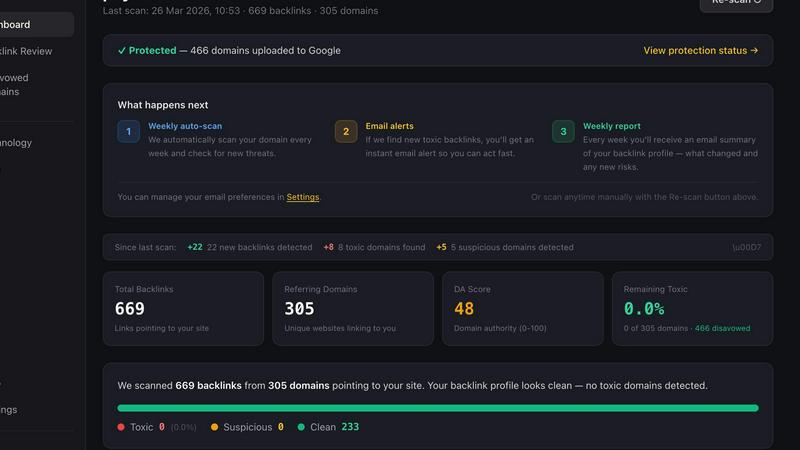
Every website picks up backlinks it didn't ask for — spam networks, link farms, scraper sites. When they cause a Google penalty or tank your rankings, you need to act fast. Disavow.ai scans your backlink profile, classifies every linking domain as clean, suspicious, or toxic using a 4-layer Smart Risk Engine, and generates the exact file Google needs to ignore the bad ones. Toxic domains are grouped into plain-English categories — Spam & Link Farms, Private Blog Networks, Known Spam Patterns, Risky Extensions, and Near-Zero Authority — each showing exactly why it was flagged. No SEO jargon, no black-box scores. Free tier lets you scan and see 15 backlinks. Pro at $39/mo gives you unlimited backlinks, full export, and weekly auto-scans. That's 70% less than Semrush for the same core functionality.
About Patrivox
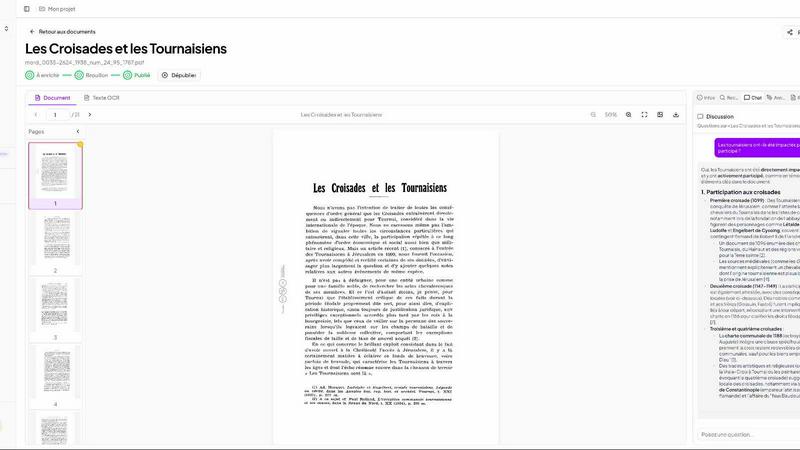
Patrivox is a game-changing European SaaS platform that is revolutionizing how organizations interact with their historical and archival documents. It leverages cutting-edge AI to instantly transform static, scanned PDF collections into a dynamic, intelligent, and fully searchable knowledge base. Designed specifically for heritage institutions, municipal archives, historical societies, dioceses, and enterprises, Patrivox solves the critical problem of "dark data"—information trapped in unsearchable formats. Its core value proposition is breathtakingly simple: drag and drop your PDFs, and within minutes, Mistral AI's advanced OCR and entity recognition goes to work. It doesn't just extract text; it identifies key entities like people, places, and organizations and weaves them into an interactive knowledge graph, revealing hidden connections. Users can then search with typo-tolerant precision or ask questions in natural language, receiving AI-generated answers with direct source citations. As a GDPR-native platform hosted entirely in Europe, it meets the highest data sovereignty standards, making it the trusted choice for institutions looking to democratize access to their archives and unlock priceless knowledge for research and public engagement.