Fusedash vs qtrl.ai
Side-by-side comparison to help you choose the right tool.
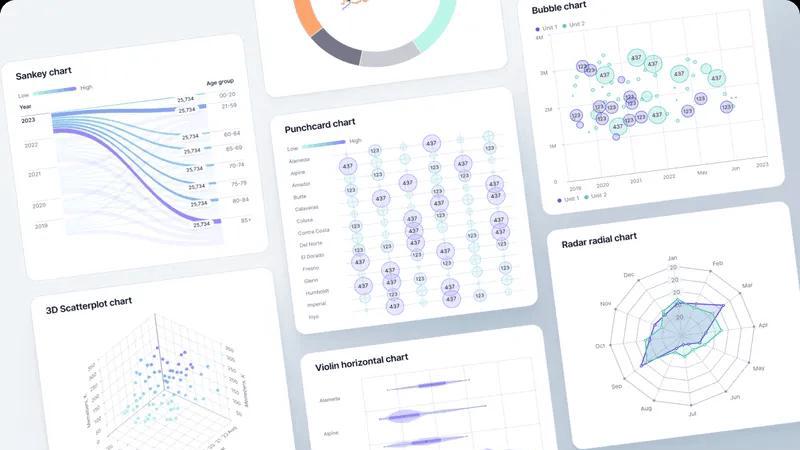
Fusedash transforms raw data into interactive dashboards and charts, enabling teams to act on insights instantly.
Last updated: March 4, 2026
qtrl.ai
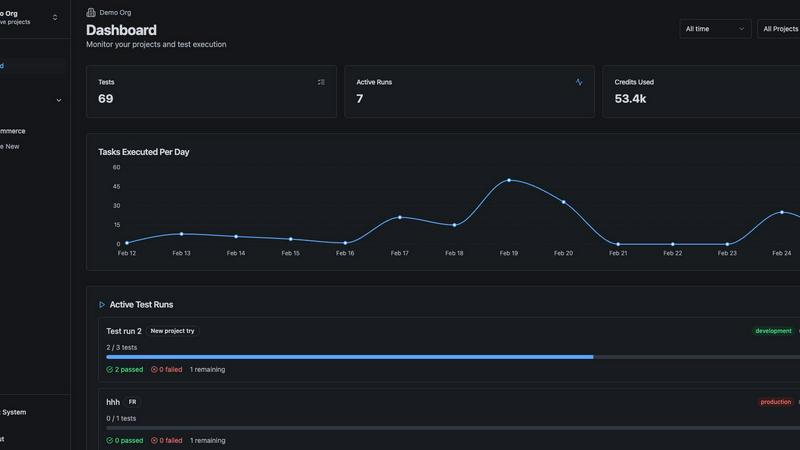
Scale QA with AI agents while keeping full control and governance.
Last updated: March 4, 2026
Visual Comparison
Fusedash

qtrl.ai

Feature Comparison
Fusedash
Flexible Views
Fusedash offers the ability to create tailored dashboard views for different audiences. Teams can transform the same dataset into various formats, including dashboards, charts, maps, and report-style views. This customization allows stakeholders to focus on what matters most without the need for lengthy back-and-forth discussions, improving clarity and efficiency.
AI Chart Generator
The AI Chart Generator within Fusedash allows users to create visually appealing and informative charts quickly from CSV files or APIs. This feature enables users to select the most appropriate chart type, apply comparisons, and refine labels, ensuring that each visual effectively communicates the intended story. Charts can be easily integrated into dashboards or used as standalone visuals for reporting purposes.
Dashboard Software
Fusedash provides a comprehensive workspace for building dashboards and reports. This feature allows users to combine performance metrics with narrative insights, providing critical context that explains changes in data. By blending monitoring and storytelling, Fusedash helps teams stay aligned and minimizes the risk of conflicting reports, ensuring everyone is on the same page.
AI Chat
The AI Chat feature enhances user experience by enabling plain language queries about data. Users can ask questions, explore various breakdowns, and receive suggestions for the best metrics and visualizations. This intuitive interaction allows teams to quickly turn insights into shareable dashboard views, making data exploration more accessible and efficient.
qtrl.ai
Autonomous QA Agents
Move beyond script maintenance nightmares. qtrl.ai deploys intelligent agents that operate on-demand or continuously, executing precise instructions across multiple environments at scale. Crucially, they work within your defined rules and execute in real browsers, not simulations, ensuring authentic user experience validation. This is AI you can actually trust to handle repetitive, complex workflows without going rogue.
Enterprise-Grade Test Management
Governance isn't an afterthought—it's the core. qtrl.ai provides a centralized command hub for all QA activities. Structure test cases, plans, and runs with full traceability from requirement to release. Built-in audit trails and compliance-ready workflows ensure every change is tracked, making it the secure, single source of truth for engineering leads and QA managers demanding visibility and control.
Progressive Automation
Ditch the all-or-nothing AI dilemma. qtrl.ai’s philosophy is gradual empowerment. Start by writing high-level test instructions yourself. Then, seamlessly transition to letting AI generate detailed tests from your requirements—all fully reviewable and approvable. The platform even analyzes coverage gaps and suggests new tests, putting you in the driver's seat for every step toward increased automation.
Adaptive Memory & Multi-Environment Execution
This is where qtrl.ai gets smarter with every interaction. Its Adaptive Memory builds a living knowledge base of your application, learning from exploration and test runs to power context-aware test generation. Coupled with robust multi-environment execution—supporting dev, staging, and prod with per-environment variables and encrypted secrets—it ensures tests are both intelligent and executed securely where it matters.
Use Cases
Fusedash
Marketing Analytics
Marketing teams can leverage Fusedash to visualize campaign performance metrics and track KPIs in real-time. By creating tailored dashboards, they can analyze customer engagement, conversion rates, and ROI, enabling data-driven decision-making that optimizes marketing strategies.
Sales Performance Monitoring
Sales teams can utilize Fusedash to monitor their performance metrics and identify trends in sales data. By using interactive dashboards, they can gain insights into sales cycles, customer segmentation, and territory performance, helping them make informed decisions that drive growth.
Financial Reporting
Finance departments can benefit from Fusedash by creating detailed financial reports that incorporate real-time data. With the ability to define consistent metrics, they can ensure accuracy in reporting, analyze trends over time, and present findings to stakeholders with clarity and context.
Operational Efficiency Tracking
Operations teams can use Fusedash to track efficiency metrics and monitor key performance indicators. By visualizing operational data, they can identify bottlenecks, optimize processes, and ensure resources are allocated effectively to enhance overall productivity.
qtrl.ai
Scaling Beyond Manual Testing
For QA teams drowning in repetitive manual checklists, qtrl.ai is the lifeline. It allows teams to start by structuring their existing manual cases in the platform, then progressively automate the most tedious flows using AI agents. This creates immediate efficiency gains, frees up human testers for complex exploratory work, and provides a clear, manageable path to a hybrid automation strategy without a risky, overnight overhaul.
Modernizing Legacy QA Workflows
Companies stuck with fragmented tools—separate test case repos, siloed automation scripts, and manual reporting—can consolidate onto qtrl.ai. It replaces the patchwork with a unified platform that integrates test management, automation, and execution. This breaks down silos, introduces much-needed traceability and auditability, and injects modern AI capabilities into outdated processes, all while maintaining strict governance.
Governing Enterprise AI Testing
Enterprises that want to leverage AI but cannot afford "black-box" unpredictability find their solution here. qtrl.ai offers permissioned autonomy levels and full agent visibility, ensuring AI operates within strict compliance guardrails. Teams can leverage AI for test generation and execution at scale across global browsers, all while maintaining full audit trails, satisfying security reviews, and meeting rigorous regulatory requirements.
Empowering Product-Led Engineering Teams
Development teams embracing a product-led growth model need quality to keep pace with rapid, user-focused iteration. qtrl.ai integrates directly into CI/CD pipelines, providing continuous quality feedback. Engineers can write high-level test instructions or connect requirements, and qtrl.ai handles the rest, ensuring new features are validated quickly and reliably without creating automation debt, thus accelerating release cycles safely.
Overview
About Fusedash
Fusedash is an innovative AI-powered data visualization platform that revolutionizes how teams interact with their data. It simplifies the process of transforming connected data into clear, actionable insights by acting as a unified workspace. With Fusedash, users can create decision-ready dashboards, interactive charts, detailed maps, and narrative reports without the hassle of rebuilding logic across multiple disconnected tools. The platform is designed for teams that are tired of manual reporting cycles and conflicting data narratives. By defining key metrics and KPIs once, Fusedash ensures that every team member—from leadership to marketing to operations—works with the same trusted numbers. This consistency not only enhances efficiency but also fosters alignment across the organization. Fusedash empowers users to monitor real-time data while providing insights into the reasons behind trends through advanced drill-down capabilities. With integrated AI features, such as natural language data chat and smart visualization assistance, Fusedash makes data exploration and reporting faster and more accessible, turning raw data into a shared source of truth that drives informed decision-making and strategic action.
About qtrl.ai
The QA landscape is at a breaking point. Manual testing crumbles under agile velocity, while traditional automation is a brittle, resource-heavy beast. Enter qtrl.ai, the definitive answer for teams refusing to compromise. This isn't just another test runner; it's a progressive AI-powered QA platform engineered to scale quality intelligently, without the terrifying "black-box" risks of fully autonomous AI. qtrl.ai masterfully bridges the critical gap, offering enterprise-grade test management as its rock-solid foundation. Here, teams organize test cases, plan runs, trace requirements, and track real-time metrics with full governance. But the real game-changer is its layered AI. You start with total control—simple manual management or human-written instructions. When ready, you progressively unlock autonomous agents that generate and maintain UI tests from plain English, executing them at scale across real browsers. Built for product-led engineering teams, QA groups scaling beyond manual, and compliance-focused enterprises, qtrl.ai delivers a trusted, transparent path from structured oversight to intelligent automation. It’s the control tower for modern quality assurance.
Frequently Asked Questions
Fusedash FAQ
What types of data can I connect to Fusedash?
Fusedash supports a wide range of data sources, including CSV files, APIs, and public datasets. This flexibility allows users to consolidate various data points into a single platform for comprehensive analysis and reporting.
How does Fusedash ensure consistency in reporting?
Fusedash enables users to define key metrics and KPIs only once, which can then be reused across all dashboards, charts, and reports. This standardization ensures that every team member is viewing the same trusted data, reducing discrepancies and conflicting reports.
Can I customize the visualizations in Fusedash?
Yes, Fusedash offers extensive customization options for visualizations. Users can adjust layouts, filters, and time ranges, allowing them to tailor the data views to meet the specific needs of different stakeholders and audiences.
Is Fusedash suitable for teams with varying data expertise?
Absolutely. Fusedash is designed for users of all skill levels. With its intuitive interface and AI-powered features, even those with limited data expertise can easily navigate the platform, ask questions, and generate insightful reports.
qtrl.ai FAQ
How does qtrl.ai's AI differ from other "autonomous" testing tools?
Alert: Many tools force a risky, AI-first approach where the AI makes opaque decisions. qtrl.ai is built on a principle of "permissioned autonomy." Its AI agents operate strictly within rules and instructions you define. You maintain full visibility into every action, and all AI-generated tests are reviewable and approvable. It's AI augmentation, not AI replacement, designed to earn trust through transparency and control.
Can we use qtrl.ai if we currently only do manual testing?
Absolutely, and that's the recommended starting point. qtrl.ai's platform is designed for progression. You can begin by using its robust test management features to organize and execute your manual test cases and plans. This gives you immediate value and a structured foundation. When your team is ready, you can gradually introduce AI-powered automation for specific flows, all within the same centralized platform.
Is our data secure, especially when using AI agents?
Security is non-negotiable. qtrl.ai is built with enterprise-grade safeguards. For AI operations, your application secrets and sensitive environment variables are encrypted and never exposed to the AI agents. The platform operates with full audit trails and is designed for compliance. You maintain sovereignty over your data and test assets at all times, with granular control over who can access and trigger automation.
How does qtrl.ai handle tests when our application UI changes?
This is a classic automation pain point. qtrl.ai's Adaptive Memory and intelligent agents are designed for resilience. The system learns from your application and past test executions. When changes occur, the AI can often suggest maintenance actions or adapt tests based on context. Furthermore, because you start with high-level instructions (e.g., "log in as a customer"), rather than brittle, code-level selectors, tests are more durable and easier to update.
Alternatives
Fusedash Alternatives
Fusedash is an advanced AI-powered data visualization platform that enables teams to transform their raw data into clear, actionable insights through decision-ready dashboards, interactive charts, and detailed reports. As part of the Analytics & Data and Business Intelligence categories, Fusedash simplifies data exploration and reporting, making it a vital tool for organizations looking to align their teams around trusted metrics. Users often seek alternatives to Fusedash for various reasons, including pricing, specific feature sets, or particular platform needs that better fit their operational requirements. When considering alternatives, it's essential to evaluate the platform's usability, integration capabilities, support options, and the flexibility to customize dashboards and reports. A solid alternative should also provide an intuitive interface and ensure consistency in data reporting across all departments.
qtrl.ai Alternatives
qtrl.ai is a trending AI-powered QA platform in the automation and dev tools space. It helps teams scale testing with intelligent agents while maintaining crucial governance and control over the entire process. This hybrid approach is gaining traction as teams seek to modernize without the risks of full AI autonomy. Users often explore alternatives for several key reasons. Budget constraints, specific integration needs with existing CI/CD pipelines, or a desire for a different balance between AI automation and traditional scripting can drive the search. The need for specialized testing types, like performance or security, also plays a role. When evaluating other options, focus on the core pillars: governance, integration depth, and AI transparency. Look for platforms that offer robust audit trails, seamless fit with your tech stack, and clear visibility into how AI agents generate and maintain tests. The goal is to accelerate release cycles without introducing new bottlenecks or compliance headaches.