
MemMachine vs Project20x
Side-by-side comparison to help you choose the right tool.

MemMachine
MemMachine is the open-source memory layer that gives AI agents lasting, personalized recall.
Last updated: February 28, 2026

Project20x
Project20x ensures your AI governance is compliant and effective for modern needs.
Last updated: March 4, 2026
Visual Comparison
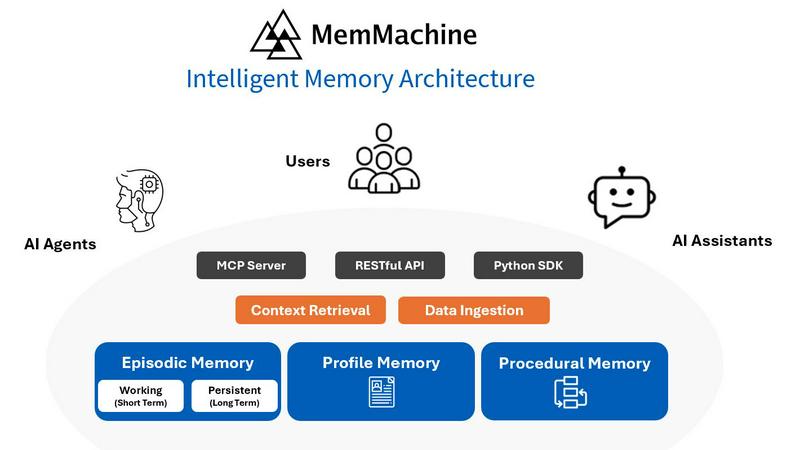
MemMachine
Project20x

Feature Comparison
MemMachine
Persistent, Cross-Session Memory
MemMachine's core innovation is a memory layer that persists seamlessly across multiple user sessions, different AI agents, and even various underlying large language models. This isn't temporary cache; it's a durable, evolving store of user data, preferences, and interaction history that builds over time, ensuring every conversation picks up where the last one left off.
Sophisticated Profile Memory
Go beyond simple chat history. MemMachine enables the construction of a rich, multidimensional user profile. It learns and stores personal details, behavioral patterns, stated preferences, and past decisions. This allows agents to proactively understand context, like knowing a user dislikes morning appointments, creating a foundation for truly anticipatory and personalized interactions.
Open-Source & Modular Architecture
Built for developers who demand control and flexibility, MemMachine is open-source. Its architecture is modular, allowing engineering teams to integrate specific components like its vector databases or graph-based relationship systems independently. You get powerful, production-ready infrastructure without being locked into a rigid, overwhelming framework.
Multi-Model & Platform Agnostic
MemMachine is designed as the universal memory layer for the AI stack. It operates independently of any single LLM provider, meaning you can switch between or use multiple models (like GPT, Claude, or open-source models) without losing the accumulated memory. This future-proofs your application and prevents vendor lock-in.
Project20x
AI-Powered Governance Layer
This core feature employs a sophisticated ten-step AI methodology to assist in the policy creation process itself. It analyzes draft legislative texts in real-time, flagging ambiguities, potential conflicts with existing laws, and gaps in logic before they become operational nightmares. It brings data-driven foresight to the drafting table, enabling lawmakers to craft clearer, more effective, and future-proof regulations from the very first draft.
Rules-as-Code Automation Engine
At the heart of Project20x, this feature automatically translates approved, human-readable policies into machine-executable code. This "Rules as Code" approach turns static PDFs into dynamic, automated workflows for permits, benefits, compliance checks, and more. It eliminates manual processing bottlenecks, ensures consistent application of the law, and creates a living digital twin of the regulatory framework that can be tested and updated with agility.
Citizen-Facing AI Agent Interface
Project20x deploys a suite of specialized AI agents trained directly on the codified rulebook. Citizens and businesses get 24/7 access to these agents for instant guidance on regulations, application processes, and eligibility checks. This feature demystifies government services, providing immediate, accurate answers and transactional support without wait times, making public service interaction as seamless as a top-tier consumer app.
Quantifiable Transparency & Audit Trail
Every action, from a policy edit in the Governance Layer to a citizen query answered by an AI agent, is logged on an immutable audit trail. This feature provides full traceability, allowing for real-time performance dashboards, impact quantification, and robust accountability. It ensures all automated processes are explainable and subject to human oversight, building essential public trust in AI-driven governance.
Use Cases
MemMachine
Personalized Healthcare Assistants
Transform sterile telehealth bots into compassionate care partners. An agent powered by MemMachine can remember a patient's medical history, medication preferences, scheduling constraints, and even personal hardships like difficulty fasting. This enables proactive, empathetic care coordination that feels human-centric, not transactional.
Context-Aware Productivity Copilots
Build AI assistants for work that truly understand your projects and workflow. Imagine a coding copilot that remembers your tech stack preferences, a writing assistant that knows your style guide, or a project manager that recalls past decisions and team feedback, providing coherent support across every tool you use.
Intelligent Customer Support Platforms
Move beyond scripted support chatbots. Equip customer service agents with a memory of every past customer interaction, product issues, and successful resolutions. This creates seamless handoffs, eliminates repetitive questions, and delivers support that feels personalized and deeply informed, boosting customer satisfaction and loyalty.
Adaptive Learning & Coaching Tools
Create educational AI tutors and fitness or wellness coaches that develop a long-term relationship with the user. By remembering past progress, struggles, goals, and motivational triggers, these agents can adapt their teaching style, recommend perfectly timed content, and provide encouragement that resonates on a personal level.
Project20x
Streamlining Federal Grant & Aid Distribution
Agencies like USDA or USAID can use Project20x to codify complex grant eligibility rules. The system automates application screening, instantly verifying criteria and calculating award amounts, while AI agents guide applicants. This slashes processing times from months to minutes, reduces errors, and ensures funds are distributed faster and more fairly to those in need.
Modernizing Defense Contracting & Compliance
The DOD can implement Project20x to manage the vast, intricate web of procurement regulations (FAR/DFARS). The platform automates compliance checks for contractors, streamlines proposal evaluations against coded requirements, and provides contractors with an AI agent for immediate regulatory clarification, accelerating acquisition cycles and strengthening supply chain integrity.
Accelerating Business Licensing & Permitting
The Department of Commerce or local governments can transform business license codes into automated workflows. Entrepreneurs interact with an AI agent to determine required permits, submit applications digitally, and receive automated approvals based on pre-coded rules. This dramatically reduces the time to open a business, fostering economic growth and innovation.
Transforming Public Education Program Administration
The Department of Education can deploy Project20x to manage federal student aid or school program funding. The system automates eligibility verification for millions of students, provides families with a personalized AI guide for the FAFSA process, and gives administrators dashboards to track fund utilization and program effectiveness in real time.
Overview
About MemMachine
The era of forgetful, stateless AI is officially over. The next wave of intelligent applications demands more than just a clever response generator; they require a persistent, evolving memory. That's where MemMachine comes in. It's not just another API wrapper or a simple chatbot builder. MemMachine is the foundational, open-source memory layer that's redefining how we build and interact with advanced AI agents. Designed for developers and engineering teams at the cutting edge, it solves the core limitation of today's LLMs by giving them the ability to store, recall, and intelligently utilize information from past interactions. This transforms generic, one-off chatbots into true intelligent partners that learn and grow with your users. By enabling applications to build sophisticated, evolving user profiles and understand nuanced preferences, MemMachine unlocks deeply personalized, coherent, and context-aware experiences across any platform. It's the critical infrastructure turning the promise of personalized AI into a tangible, buildable reality.
About Project20x
Project20x is the AI-native operating system for modern government, breaking the cycle of bureaucratic stagnation by translating dense policy into dynamic, executable digital action. This isn't just another software suite; it's a foundational shift in how governance is built, managed, and experienced. The platform deconstructs the entire lifecycle of public policy through three revolutionary layers: Governance, Management, and Interface. It empowers lawmakers with AI-driven legislative analysis, transforms approved policies directly into automated "Rules as Code" workflows, and deploys always-available AI agents to serve citizens. Designed for government agencies, policymakers, and the public, Project20x delivers unprecedented transparency, operational efficiency, and 24/7 civic engagement. It's the critical bridge between legislative intent and real-world impact, ensuring every regulation is traceable, quantifiable, and securely overseen by humans. This is how government scales for the 21st century.
Frequently Asked Questions
MemMachine FAQ
How is MemMachine different from a vector database?
While MemMachine utilizes vector search for semantic recall, it is a complete memory system. A vector database is just one component. MemMachine adds crucial layers on top: it structures data into evolving user profiles, manages temporal and graph-based relationships between entities, and provides the orchestration logic to decide what to store, when to recall it, and how to present it to an LLM for context-aware reasoning.
Is my user's data secure with MemMachine?
As an open-source solution, MemMachine gives you full control over your data infrastructure and compliance. You can deploy it within your own secure cloud environment or private network, ensuring all memory data remains under your governance and meets your specific security, privacy, and regulatory requirements (like HIPAA or GDPR).
Can I use MemMachine with any LLM or AI model?
Absolutely. MemMachine is architected to be model-agnostic. It provides the memory layer that sits between your application and your chosen LLM provider (e.g., OpenAI, Anthropic, Cohere, or open-source models). You can feed the enriched context from MemMachine into any model's prompt, making it a versatile foundation for any AI agent stack.
What does "open-source memory layer" mean for developers?
It means you get the full source code, enabling complete transparency, customization, and community-driven improvement. You can audit the code, modify it to fit unique needs, contribute back, and avoid proprietary black boxes. It's infrastructure built by and for developers, ensuring flexibility and avoiding vendor lock-in for a core component of your AI architecture.
Project20x FAQ
How does Project20x ensure the AI doesn't make biased or incorrect decisions?
Project20x is built on a principle of human-centric AI. The system does not create policy; it executes codified rules created and approved by human lawmakers. Every automated decision is traceable back to the specific rule in the source legislation. Furthermore, all AI agent interactions are monitored, and the system includes robust human-in-the-loop oversight protocols for complex or exceptional cases, ensuring accountability at every step.
Is our sensitive government data secure on the Project20x platform?
Security is foundational, not an add-on. Project20x is architected to meet and exceed stringent government security standards (like FedRAMP requirements). It employs end-to-end encryption, strict access controls, and operates with a zero-trust security model. All data processing and storage comply with the highest levels of governmental data classification and privacy protocols.
Can Project20x integrate with our existing legacy government IT systems?
Yes. Project20x is designed as a platform that can integrate with existing systems through secure APIs and modular components. The "Rules as Code" engine can pull data from legacy databases to inform decisions, and the interface layer can be deployed as a front-end channel, augmenting current infrastructure without requiring a full, risky "rip-and-replace" overhaul.
What happens when laws change? How quickly can the platform update?
This is where the "Rules as Code" methodology shines. When a new law is passed and signed, policymakers use the Governance Layer to analyze and refine it. Once finalized, the updated policy is translated into new code within the Management Layer. This update can then be deployed across the entire ecosystem—updating automated workflows and retraining the public-facing AI agents—in a fraction of the time it takes to manually retrain staff and rewrite procedural manuals.
Alternatives
MemMachine Alternatives
MemMachine is a trending open-source memory layer, a critical new category of AI infrastructure. It's designed to give AI agents persistent, evolving memory, transforming them from stateless chatbots into intelligent partners that learn and grow with you over time. Developers often explore alternatives for various reasons. This could be due to specific pricing models, the need for different deployment options like fully managed cloud services, or requirements for unique features beyond core memory functionality. The search is driven by finding the perfect fit for a project's technical stack and long-term roadmap. When evaluating options, focus on core capabilities. Key considerations include the robustness of the memory engine, flexibility in LLM and platform integrations to avoid lock-in, and data control provisions. The goal is to secure infrastructure that not only adds recall but does so in a way that aligns with your development philosophy and application needs.
Project20x Alternatives
Project20x is a leading AI governance platform, specifically designed to transform how governments create, manage, and implement policy. It falls squarely into the category of AI Assistants for governance, using advanced technology to translate complex regulations into automated, citizen-friendly services. Users often explore alternatives for several key reasons. Budget constraints and specific pricing models are a primary driver, as public sector procurement can be complex. Others may seek platforms with different feature specializations, such as a stronger focus on public consultation tools versus backend legislative analysis. The need for integration with existing government IT ecosystems or a preference for different deployment models (like on-premise vs. cloud) also fuels the search for other solutions. When evaluating an alternative, focus on core capabilities. Look for robust AI that can handle legislative text analysis and "Rules as Code" automation. Security and auditability are non-negotiable for public trust. Finally, assess the platform's ability to serve both internal policy makers and external citizens through intuitive interfaces, ensuring the solution bridges the entire governance lifecycle.