
PoYo API vs Project20x
Side-by-side comparison to help you choose the right tool.

PoYo API
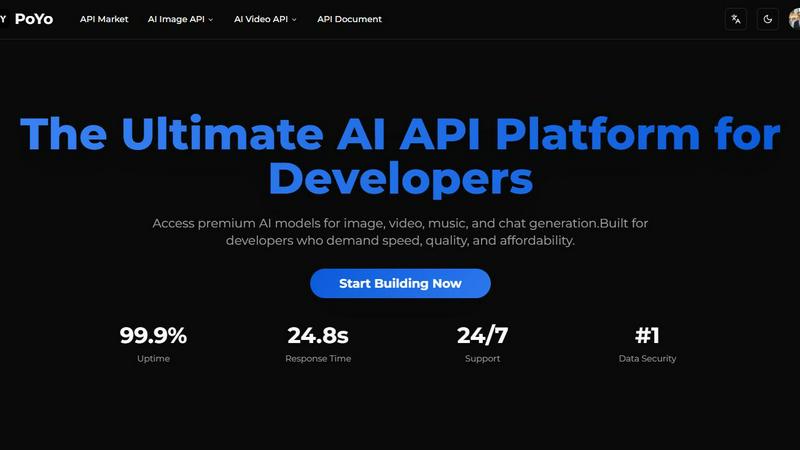
PoYo API unlocks premium AI models for image, video, music, and chat generation.
Last updated: February 28, 2026

Project20x
Project20x ensures your AI governance is compliant and effective for modern needs.
Last updated: March 4, 2026
Visual Comparison
PoYo API
Project20x
Feature Comparison
PoYo API
Unified Multi-Model API Gateway
Access the entire generative AI landscape through one simple, unified endpoint. PoYo API consolidates over 500 premium models for image, video, music, and chat generation, eliminating the need to manage multiple API keys, SDKs, and billing systems from different providers. This singular integration point dramatically reduces development complexity and overhead, allowing you to switch between cutting-edge models like Sora 2, Claude Sonnet 4.5, or Suno v5 with a single line of code change, keeping you agile and at the forefront of AI capabilities.
Credit-Based, Subscription-Free Pricing
Break free from the shackles of recurring monthly fees and restrictive tiers. PoYo API operates on a transparent, pay-as-you-go credit system where you only pay for successful generations. Purchase credits once and use them as needed—they never expire. This model is a game-changer for projects with variable workloads, enabling true cost control and scalability. It ensures you're never penalized for experimentation or sudden spikes in demand, making advanced AI accessible and financially predictable.
Enterprise-Grade Security & Reliability
Your data and operations are shielded by a zero-knowledge architecture and military-grade encryption for all API keys and sensitive data. PoYo API is built on a robust infrastructure guaranteeing 99.9% uptime, backed by 24/7 monitoring. Full audit logging provides compliance-ready transparency, while the policy of not charging for failed generations underscores a commitment to fairness and operational integrity that enterprise developers can trust for their most critical applications.
Developer-First Tools & Low-Latency Performance
Hit the ground running with free playground access to test all models without spending a credit, and integrate in minutes using the elegantly simple two-endpoint async API (submit task, query results). The platform is engineered for high concurrency and ultra-low latency (<50ms response times), with webhook support for real-time callbacks on long-running tasks. Combined with manual retry options and dedicated 24/7 technical support, it provides a frictionless, high-performance development experience.
Project20x
AI-Powered Governance Layer
This core feature employs a sophisticated ten-step AI methodology to assist in the policy creation process itself. It analyzes draft legislative texts in real-time, flagging ambiguities, potential conflicts with existing laws, and gaps in logic before they become operational nightmares. It brings data-driven foresight to the drafting table, enabling lawmakers to craft clearer, more effective, and future-proof regulations from the very first draft.
Rules-as-Code Automation Engine
At the heart of Project20x, this feature automatically translates approved, human-readable policies into machine-executable code. This "Rules as Code" approach turns static PDFs into dynamic, automated workflows for permits, benefits, compliance checks, and more. It eliminates manual processing bottlenecks, ensures consistent application of the law, and creates a living digital twin of the regulatory framework that can be tested and updated with agility.
Citizen-Facing AI Agent Interface
Project20x deploys a suite of specialized AI agents trained directly on the codified rulebook. Citizens and businesses get 24/7 access to these agents for instant guidance on regulations, application processes, and eligibility checks. This feature demystifies government services, providing immediate, accurate answers and transactional support without wait times, making public service interaction as seamless as a top-tier consumer app.
Quantifiable Transparency & Audit Trail
Every action, from a policy edit in the Governance Layer to a citizen query answered by an AI agent, is logged on an immutable audit trail. This feature provides full traceability, allowing for real-time performance dashboards, impact quantification, and robust accountability. It ensures all automated processes are explainable and subject to human oversight, building essential public trust in AI-driven governance.
Use Cases
PoYo API
Dynamic Content Generation for Social & Marketing Platforms
Power next-generation social media apps, ad platforms, and content marketing tools by generating unique, on-brand visuals, video clips, and audio soundtracks in real-time. Automate the creation of promotional materials, personalized marketing assets, and engaging social posts at scale. The ability to swiftly switch between high-quality image and video models like Nano Banana Pro and Sora 2 allows platforms to offer diverse, trending content formats to their users without massive creative teams.
AI-Powered Creative Suites & Entertainment Apps
Build all-in-one creative studios where users can generate everything from song lyrics to full musical compositions using Suno integration, create storyboard illustrations, and produce short video narratives. Ideal for music production apps, indie game developers needing assets, and interactive storytelling platforms. PoYo API's consolidated music, image, and video APIs turn a single app into a multifaceted creative powerhouse.
Scalable Chatbots and Conversational AI Interfaces
Integrate the most advanced large language models (LLMs) like GPT-5, Claude 4.5, and Gemini 3 to build sophisticated, multi-modal chatbots, customer support agents, or interactive tutors. Leverage the unified API to easily A/B test different models for cost/performance optimization or combine chat with image generation for assistants that can both describe and create visual content, delivering a deeply immersive user experience.
Rapid Prototyping and AI Product Development
Accelerate your MVP development and innovation cycles. Developers and startups can experiment with hundreds of state-of-the-art AI models without upfront commitment or complex contracts. The free playground and flexible credit system allow for extensive testing of image, video, and music generation for new product ideas, enabling rapid validation of AI features before committing significant engineering resources or budget.
Project20x
Streamlining Federal Grant & Aid Distribution
Agencies like USDA or USAID can use Project20x to codify complex grant eligibility rules. The system automates application screening, instantly verifying criteria and calculating award amounts, while AI agents guide applicants. This slashes processing times from months to minutes, reduces errors, and ensures funds are distributed faster and more fairly to those in need.
Modernizing Defense Contracting & Compliance
The DOD can implement Project20x to manage the vast, intricate web of procurement regulations (FAR/DFARS). The platform automates compliance checks for contractors, streamlines proposal evaluations against coded requirements, and provides contractors with an AI agent for immediate regulatory clarification, accelerating acquisition cycles and strengthening supply chain integrity.
Accelerating Business Licensing & Permitting
The Department of Commerce or local governments can transform business license codes into automated workflows. Entrepreneurs interact with an AI agent to determine required permits, submit applications digitally, and receive automated approvals based on pre-coded rules. This dramatically reduces the time to open a business, fostering economic growth and innovation.
Transforming Public Education Program Administration
The Department of Education can deploy Project20x to manage federal student aid or school program funding. The system automates eligibility verification for millions of students, provides families with a personalized AI guide for the FAFSA process, and gives administrators dashboards to track fund utilization and program effectiveness in real time.
Overview
About PoYo API
PoYo API is the ultimate, unified gateway for developers to harness the explosive power of over 500 premium AI models. This cutting-edge platform shatters the traditional barriers of AI integration, offering a single API key that unlocks the entire spectrum of generative AI: from stunning images and cinematic videos to original music and intelligent chat. Built from the ground up for modern development teams, PoYo API is engineered for those who refuse to compromise on speed, quality, or cost. Its revolutionary credit-based pricing model eliminates predatory subscriptions, ensuring you only pay for what you actually use, with credits that never expire. This is not just another API service; it's a foundational infrastructure layer designed for scalability, boasting enterprise-grade security, a guaranteed 99.9% uptime SLA, and sub-50ms response times. Whether you're a startup prototyping the next big social app or an enterprise building mission-critical tools, PoYo API empowers you to seamlessly integrate and scale the world's most advanced AI models, accelerating your development cycle from weeks to minutes and future-proofing your applications with effortless access to the latest model releases.
About Project20x
Project20x is the AI-native operating system for modern government, breaking the cycle of bureaucratic stagnation by translating dense policy into dynamic, executable digital action. This isn't just another software suite; it's a foundational shift in how governance is built, managed, and experienced. The platform deconstructs the entire lifecycle of public policy through three revolutionary layers: Governance, Management, and Interface. It empowers lawmakers with AI-driven legislative analysis, transforms approved policies directly into automated "Rules as Code" workflows, and deploys always-available AI agents to serve citizens. Designed for government agencies, policymakers, and the public, Project20x delivers unprecedented transparency, operational efficiency, and 24/7 civic engagement. It's the critical bridge between legislative intent and real-world impact, ensuring every regulation is traceable, quantifiable, and securely overseen by humans. This is how government scales for the 21st century.
Frequently Asked Questions
PoYo API FAQ
How does the credit-based pricing work?
You purchase credits upfront, which are stored in your account balance. Each AI model has a fixed cost per generation (e.g., $0.05 for an image). When you make a successful API call, the corresponding amount is deducted from your credit balance. The key advantages are that credits never expire, you only pay for what you use, and there are no recurring monthly subscriptions. This provides ultimate flexibility and cost control for projects of any size.
What happens if a generation task fails?
PoYo API operates on a strict "no charge for failures" policy. If a task fails due to a system error, API issue, or timeout, you are not charged any credits. You can review the failure reason in your dashboard and choose to manually retry the task. This ensures you only pay for successful, usable outputs, making your credit spending efficient and predictable.
Is there a way to test the API before purchasing credits?
Absolutely. PoYo API provides a fully-featured free playground on each model's page. You can experiment with all generation parameters, test prompts, and see real outputs without using any credits or even providing a credit card. This allows developers to evaluate model quality, fine-tune parameters, and ensure the API meets their needs before any integration or financial commitment.
How do I get support if I encounter integration issues?
PoYo API offers dedicated 24/7 technical support, not just automated bot responses. You can access support through direct channels for integration help, technical questions, and best practices. This is backed by robust monitoring systems ensuring 99.9% uptime. The combination of reliable infrastructure and accessible expert help ensures minimal disruption to your development workflow and production applications.
Project20x FAQ
How does Project20x ensure the AI doesn't make biased or incorrect decisions?
Project20x is built on a principle of human-centric AI. The system does not create policy; it executes codified rules created and approved by human lawmakers. Every automated decision is traceable back to the specific rule in the source legislation. Furthermore, all AI agent interactions are monitored, and the system includes robust human-in-the-loop oversight protocols for complex or exceptional cases, ensuring accountability at every step.
Is our sensitive government data secure on the Project20x platform?
Security is foundational, not an add-on. Project20x is architected to meet and exceed stringent government security standards (like FedRAMP requirements). It employs end-to-end encryption, strict access controls, and operates with a zero-trust security model. All data processing and storage comply with the highest levels of governmental data classification and privacy protocols.
Can Project20x integrate with our existing legacy government IT systems?
Yes. Project20x is designed as a platform that can integrate with existing systems through secure APIs and modular components. The "Rules as Code" engine can pull data from legacy databases to inform decisions, and the interface layer can be deployed as a front-end channel, augmenting current infrastructure without requiring a full, risky "rip-and-replace" overhaul.
What happens when laws change? How quickly can the platform update?
This is where the "Rules as Code" methodology shines. When a new law is passed and signed, policymakers use the Governance Layer to analyze and refine it. Once finalized, the updated policy is translated into new code within the Management Layer. This update can then be deployed across the entire ecosystem—updating automated workflows and retraining the public-facing AI agents—in a fraction of the time it takes to manually retrain staff and rewrite procedural manuals.
Alternatives
PoYo API Alternatives
PoYo API is a leading unified platform in the AI Assistants category, granting developers streamlined access to a massive library of over 500 premium AI models for generating images, videos, music, and chat. It's designed for building sophisticated applications with a focus on speed, quality, and a flexible, credit-based cost structure. Even with its robust offering, developers often scout for alternatives to match specific project needs. This search is typically driven by budget constraints, the need for specialized models not in the current library, or platform requirements like specific integration protocols or regional data handling. The fast-paced AI landscape means new, niche players are constantly emerging. When evaluating other options, key considerations include the breadth and specialty of the model library, the transparency and scalability of the pricing model, and the strength of security and compliance frameworks. Prioritizing platforms with proven reliability, high uptime guarantees, and responsive technical support is non-negotiable for production-grade applications.
Project20x Alternatives
Project20x is a leading AI governance platform, specifically designed to transform how governments create, manage, and implement policy. It falls squarely into the category of AI Assistants for governance, using advanced technology to translate complex regulations into automated, citizen-friendly services. Users often explore alternatives for several key reasons. Budget constraints and specific pricing models are a primary driver, as public sector procurement can be complex. Others may seek platforms with different feature specializations, such as a stronger focus on public consultation tools versus backend legislative analysis. The need for integration with existing government IT ecosystems or a preference for different deployment models (like on-premise vs. cloud) also fuels the search for other solutions. When evaluating an alternative, focus on core capabilities. Look for robust AI that can handle legislative text analysis and "Rules as Code" automation. Security and auditability are non-negotiable for public trust. Finally, assess the platform's ability to serve both internal policy makers and external citizens through intuitive interfaces, ensuring the solution bridges the entire governance lifecycle.