

Crawlkit
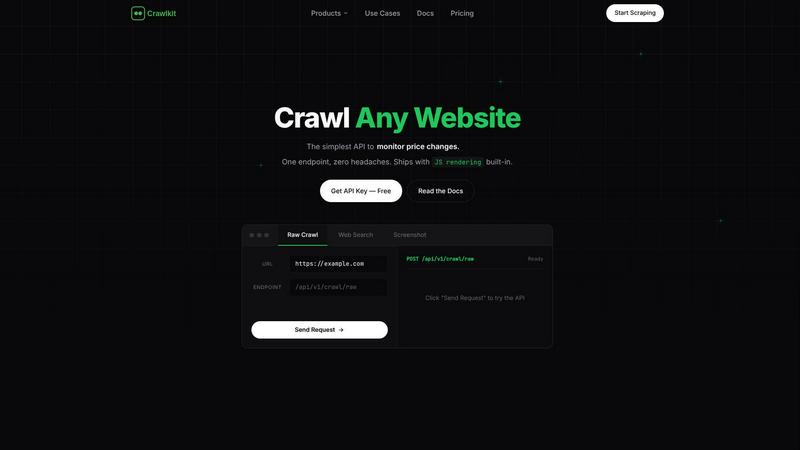
CrawlKit is an API-first platform that simplifies web scraping, delivering structured data from any site with a single.
About Crawlkit
CrawlKit is a sophisticated web data extraction platform meticulously crafted for developers and data teams who seek a reliable and scalable solution for accessing web data. In an era where web scraping often faces challenges such as rotating proxies, headless browsers, anti-bot mechanisms, and strict rate limits, CrawlKit streamlines the entire process. By managing proxy rotation, browser rendering, retries, and content blocking, it allows users to focus on what truly matters: leveraging the extracted data. With CrawlKit, users can effortlessly extract diverse types of web data—from raw page content and search results to visual snapshots and professional data from platforms like LinkedIn—all through a single, intuitive interface. Whether you are monitoring price fluctuations, tracking stock levels, or capturing screenshots, CrawlKit stands as the essential tool for developers seeking dependable and efficient web scraping capabilities, enabling them to turn the web into a rich source of structured data.
Features of Crawlkit
Comprehensive Data Extraction
CrawlKit offers users the ability to extract structured data from a myriad of sources, including websites, social media platforms, and app stores, all through a single API call. This feature eliminates the need for multiple tools and provides a seamless experience for developers.
Proxy Management and Rate Limiting
The platform automatically handles proxy rotation and rate limiting, ensuring that users can scrape data without interruptions. This feature is crucial for maintaining a stable connection and avoiding IP bans while extracting data from sites that employ anti-scraping measures.
Clean and Complete Data Outputs
CrawlKit guarantees that users receive complete results by waiting for full page loads and validating responses. This ensures that developers never have to deal with partial or erroneous data, enhancing the overall reliability of the extracted information.
Transparent Pricing Structure
CrawlKit features a clear and fixed pricing model, allowing users to know exactly what they pay for without hidden fees or surprise charges. The credit-based system enables scalability, as users can buy more credits to reduce costs per request, making it a budget-friendly option for teams of all sizes.
Use Cases of Crawlkit
CRM Enrichment
With CrawlKit, businesses can automatically enrich their CRM systems by pulling LinkedIn profile data. This includes extracting job titles, company information, and contact details for leads, allowing sales teams to enhance their outreach efforts.
Social Media Growth Tracking
Marketers can utilize CrawlKit to monitor competitors' Instagram growth on a weekly basis. By analyzing follower counts, engagement metrics, and top-performing posts, businesses can gain valuable insights into social media strategies that drive results.
App Review Analysis
CrawlKit is ideal for app developers and marketers looking to pull comprehensive app reviews from platforms like the Play Store and App Store. This data can be analyzed to identify user sentiments, improve app features, and enhance overall user experience.
Competitive Intelligence
Companies can leverage CrawlKit to gather intel on competitors by extracting data from their websites and social profiles. This enables organizations to understand market positioning, product offerings, and marketing strategies, thereby informing their own business decisions.
Frequently Asked Questions
What types of data can I extract with Crawlkit?
CrawlKit allows users to extract a wide variety of data, including raw page content, structured information from social media platforms like LinkedIn and Instagram, as well as app reviews and details from app stores.
How does Crawlkit handle anti-bot protections?
CrawlKit simplifies the web scraping process by managing proxy rotation and browser rendering, which helps to bypass anti-bot protections that might otherwise hinder data extraction efforts.
Is there a limit to the number of API calls I can make?
CrawlKit offers a flexible credit-based system with no monthly commitments or rate limits, allowing users to make as many API calls as needed based on the credits they purchase.
Can I integrate Crawlkit with my existing tools?
Yes, CrawlKit is designed as a simple HTTP API that can be used with any programming language or platform, ensuring compatibility with your current tools and workflows without any vendor lock-in.
Explore more in this category:
Similar to Crawlkit

BillionVerify
BillionVerify is a professional email verification service built to solve one problem: bad email data costs businesses money.

GetYouTubeTranscript
Free YouTube transcripts on the web, a Chrome extension, and an API + MCP server so AI assistants can read YouTube.


Ideogram Studio
Create text-perfect logos, posters, ads, packaging, and ecommerce visuals with Ideogram 4 AI workflows.


MetaMuse
Create AI videos from prompts and references, then generate and edit campaign-ready visuals with MetaMuse image and video tools.
