
dmaya vs Genstory
Side-by-side comparison to help you choose the right tool.

dmaya
dMaya is the AI design platform for agencies that generates client-ready UI and exports to code instantly.
Last updated: April 13, 2026

Genstory
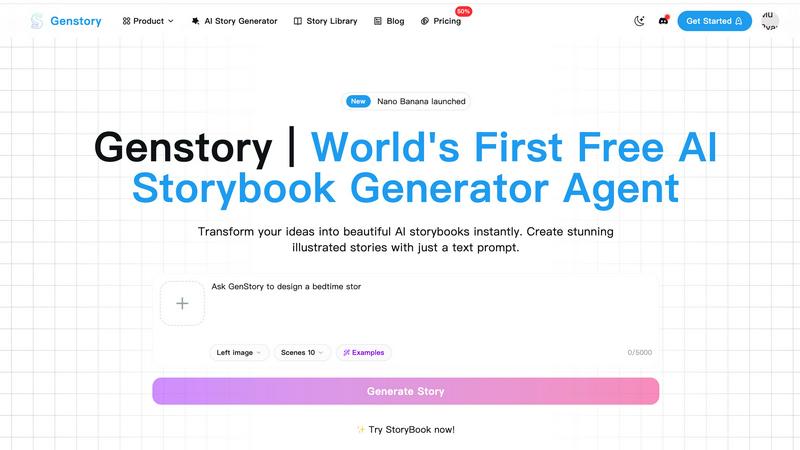
Genstory instantly transforms your text prompts into stunning AI storybooks, comics, and cinematic videos.
Last updated: February 27, 2026
Visual Comparison
dmaya

Genstory
Feature Comparison
dmaya
Conversational AI Design Generation
Describe any interface concept in natural language and watch dMaya generate complete, production-ready UI designs within seconds. This isn't just a static image; it's a fully structured layout with components, typography, and a logical design system. The AI understands complex requests for multi-screen flows, dashboards, and mobile apps, providing a professional starting point that eliminates blank canvas paralysis and accelerates the initial creative phase dramatically.
Real-Time Iterative Refinement
The design process is a dialogue. Using an integrated chat interface, you instruct the AI to make precise changes: "swap the primary color to a navy blue," "convert this to a dark mode variant," or "add a testimonial section here." Every command is executed instantly and accurately on the canvas. This allows for rapid exploration of visual directions and fine-tuning of details without manual dragging, resizing, or styling, streamlining the revision process to the speed of thought.
Client-Centric Presentation & Feedback Loops
Ditch cumbersome PDFs and static mockups. Generate a secure, shareable preview link for any project. Clients and stakeholders can view interactive designs directly in their browser—no account or login required. They can leave contextual feedback and comments, which funnel directly back into your dMaya workspace. This creates a seamless, professional review cycle that turns what used to be a multi-day email thread into a process that concludes in minutes.
Design-to-Code Export for AI Development
When designs are approved, dMaya doesn't leave you stranded. Export your screens as clean, well-structured HTML, CSS, and JavaScript code. This output is specifically engineered to be consumed by modern AI coding agents and assistants like Cursor, Claude Code, or GitHub Copilot. Hand off the exported code, and your developer or AI agent can efficiently translate the visual design into production-ready components in your framework of choice, bridging the infamous design-development gap.
Genstory
Lightning-Fast AI Generation
Witness the entire creative process collapse from hours to seconds. Genstory's advanced AI engine simultaneously crafts coherent, engaging narratives and generates corresponding high-quality illustrations based on your single prompt. This rapid iteration cycle allows for incredible creative exploration, letting you generate multiple story concepts and visual styles almost instantaneously to find the perfect fit for your vision.
Intuitive Natural Language Interface
Forget complex commands or steep learning curves. Genstory operates on pure, straightforward conversation. You guide the AI's creation simply by describing your idea in everyday language. Whether it's "a story about a shy robot learning to dance on Mars" or "an educational tale about the water cycle for a 5-year-old," the AI interprets your intent and builds the world, making advanced story generation accessible to users of all technical skill levels.
Multi-Format Export & Sharing
Your created story isn't locked into the platform. Genstory provides flexible output options to suit any need. Seamlessly generate a print-ready PDF for physical storybooks or bedtime copies. Alternatively, create interactive web stories for easy digital sharing via link, perfect for classrooms, family members, or social media. This flexibility ensures your story lives and can be enjoyed wherever your audience is.
Dynamic Story Library & Inspiration
Jumpstart your creativity by exploring a constantly growing, public library of AI-generated stories from other users. This feature serves as both a showcase of the platform's capabilities and a direct source of inspiration. Browse diverse genres, artistic styles, and narrative concepts to see what's possible, which can help you refine your own prompts and discover new storytelling directions you hadn't considered.
Use Cases
dmaya
Agency Pitch & Concept Development
Agencies can revolutionize their client acquisition and discovery phases. During initial meetings, describe the client's vision and generate live design concepts on the fly. Quickly present multiple, polished visual directions to stakeholders within hours instead of weeks. This capability demonstrates immense value early, helps align on aesthetic direction before costly development begins, and significantly increases win rates by showcasing tangible, professional work instantly.
Product Team Ideation & Prototyping
Product managers and designers can use dMaya to explore UI concepts and user flows before committing engineering resources. Rapidly prototype different layouts for a new feature, generate A/B test variants visually, and collaborate with cross-functional teams in a shared workspace. This ensures that everyone—from design to engineering to leadership—is aligned on the visual and experiential goal, reducing rework and miscommunication down the line.
Freelancer Project Scalability
Freelancers and independent designers can dramatically increase their capacity and service offerings. Take on more client projects without extending timelines by leveraging AI for initial drafts and tedious revisions. Deliver high-fidelity concepts faster, impress clients with interactive presentations, and streamline the feedback process. This efficiency allows for higher-value project pricing and the ability to serve more clients while maintaining exceptional quality and a professional workflow.
Design System Exploration & Tokenization
Teams looking to establish or evolve a design system can use dMaya as a powerful exploration tool. Generate multiple component variations (buttons, cards, nav bars) using conversational AI to test different visual languages. The platform's automatic design tokenization maintains consistency across all generated screens, providing a practical sandbox to define color palettes, typography scales, and spacing rules that can later be formalized into a coded system.
Genstory
Personalized Bedtime Story Creation
Parents can craft truly unique bedtime adventures featuring their child as the protagonist. Instantly generate stories with custom elements like a favorite animal sidekick, a specific moral lesson, or set in a beloved magical realm. This transforms routine reading into a deeply personal and bonding experience, fostering a love for stories and making children the heroes of their own nightly adventures.
Interactive Educational Content Development
Educators and curriculum designers can use Genstory to produce compelling visual narratives that explain complex concepts. It's ideal for creating stories for ESL learners, special education resources, or thematic units in history and science. These AI-generated storybooks make abstract ideas "sticky" and memorable, increasing student engagement and providing tailored materials that resonate with diverse classrooms.
Creative Writing & Prototyping
Aspiring authors, screenwriters, and game developers can use Genstory as a powerful brainstorming and prototyping tool. Quickly visualize scene concepts, character interactions, or world-building elements to test narrative flow and aesthetic tone. It allows for rapid iteration on story premises, helping creators overcome writer's block and flesh out ideas before committing to longer-form traditional writing.
Marketing & Brand Storytelling
Content marketers and small businesses can leverage Genstory to create engaging branded narratives or explainer content. Generate short, illustrated stories to explain a product's origin, convey company values, or create shareable social media content that stands out. This approach humanizes brands and explains concepts in an emotionally resonant format that pure text or standard graphics cannot match.
Overview
About dmaya
dMaya is the AI design platform that's finally built for professionals, not hobbyists. In a landscape flooded with tools that skip straight to code, dMaya reclaims the critical design-first workflow. It's a vibe design platform engineered for agencies, product teams, and freelancers who need to visualize, iterate, and get client approval before a single developer writes a line. You describe your vision—a SaaS dashboard, an e-commerce flow, a mobile app—in plain language, and dMaya's AI agent generates polished, professional UI screens in seconds. The magic happens in conversation: you chat with the AI to change colors, swap layouts, adjust typography, or add new sections, with every change rendered instantly. Design tokens ensure visual consistency automatically across every screen. Then, you share a simple preview link for client review and feedback, collapsing a days-long approval cycle into minutes. Once signed off, export clean HTML, CSS, and JS to hand directly to AI coding agents like Cursor or Claude Code for build-out in React, Next.js, Flutter, or any framework. dMaya is the missing link for teams that prioritize intentional design, early problem-solving, and stakeholder alignment to ship with confidence.
About Genstory
Genstory is the AI story generator agent that's revolutionizing digital storytelling. Powered by cutting-edge Gemini Storybook technology, it transforms fleeting ideas and simple text prompts into fully-illustrated, professional-grade storybooks in mere seconds. This isn't just another text generator; it's a complete creative suite that handles narrative structure, character development, and visual artistry simultaneously. The platform is designed for a wide audience: parents seeking unique bedtime stories, educators creating engaging lesson materials, and aspiring writers or content creators looking to visualize their concepts instantly. Its core value proposition lies in democratizing high-quality story creation, removing technical barriers like illustration skills or complex software. By leveraging advanced AI, Genstory delivers lightning-fast, multi-dimensional output, making personalized, beautiful storybooks an accessible reality for anyone with an imagination. It's the fastest way to go from a spark of inspiration to a shareable, illustrated book.
Frequently Asked Questions
dmaya FAQ
How is dMaya different from other AI design tools?
dMaya is purpose-built for professional, client-facing workflows where design approval precedes development. Unlike tools that generate only code or target solo builders, dMaya focuses on the visual design and presentation phase. It provides a collaborative canvas, client feedback tools, and a conversational AI tailored for iterative visual refinement, ensuring teams can align stakeholders and catch problems before they become expensive coding issues.
What kind of code does dMaya export?
dMaya exports clean, vanilla HTML, CSS, and JavaScript. This code is not tied to a specific framework, making it an ideal, agnostic handoff artifact. It is structured and commented to be easily interpreted and converted by AI coding assistants (like Cursor or Claude Code) or developers into any modern framework such as React, Next.js, Vue, Svelte, or Flutter, providing maximum flexibility for your development team.
Do clients need an account to review designs?
No. Client and stakeholder review requires zero accounts. You simply generate a shareable link from any project in dMaya and send it to your reviewers. They can view the interactive design presentation in their standard web browser, leave comments, and provide feedback without any sign-up process, friction, or software installation, making the approval process incredibly smooth and accessible.
Can I work on multiple screen sizes at once?
Yes. dMaya features a multi-screen canvas that allows you to work on desktop, tablet, and mobile frames simultaneously on an infinite canvas. You can organize screens for different device breakpoints or user flow steps side-by-side, drag them around, and zoom for detail. The AI can generate and modify designs for specific device contexts, and design tokens ensure consistency across all screen sizes automatically.
Genstory FAQ
What technology powers Genstory?
Genstory is powered by advanced Gemini Storybook technology, a sophisticated AI system specifically fine-tuned for narrative and visual coherence. This technology integrates large language models for text generation with state-of-the-art image diffusion models, allowing it to understand your prompt and produce a synchronized storybook with matching illustrations seamlessly.
Do I own the stories and illustrations I create?
Yes, you typically retain ownership of the creative content you generate using Genstory. The platform acts as a tool for your creation. However, it is always crucial to review the specific Terms of Service for detailed information on licensing, usage rights, and any limitations regarding commercial publication or redistribution of the AI-generated assets.
How long does it take to generate a storybook?
Generation is incredibly fast. From the moment you submit your text prompt, Genstory's AI completes the entire process of writing the narrative and creating all accompanying illustrations in just a few seconds. The exact time may vary slightly based on story length and complexity, but it is designed for near-instantaneous results.
Can I customize or edit the story after it's generated?
Absolutely. Genstory is designed for collaborative creation with the AI. After the initial generation, you can review the entire storybook and make adjustments. This includes editing the text, refining characters, requesting changes to specific illustrations, or altering the plot direction, giving you full creative control to perfect the final output.
Alternatives
dmaya Alternatives
dmaya is an AI-powered vibe design platform that sits at the intersection of visual design and rapid prototyping. It's built for agencies and teams who need to create, iterate, and get client approval on UI designs before a single line of code is written. By chatting with an AI, users generate polished screens from text, making it a standout in the emerging category of conversational design tools. Users often explore alternatives for several key reasons. Budget constraints or specific pricing models can drive the search, as can the need for different feature sets, like more advanced prototyping or integration with existing developer workflows. Platform compatibility is another major factor, with teams needing tools that fit seamlessly into their current tech stack, whether that's Figma, Webflow, or a specific code framework. When evaluating other options, focus on your core workflow needs. Consider the fidelity of the AI-generated output, the smoothness of the client feedback and approval cycle, and the quality and flexibility of the exported code. The best alternative will balance AI-assisted speed with the intentional design control needed to align teams and catch issues early, ensuring you don't sacrifice vision for velocity.
Genstory Alternatives
Genstory is a leading AI-powered creative suite that falls squarely into the category of AI story and content generators. It specializes in transforming simple text prompts into fully illustrated digital picture books, comics, and cinematic videos, making it a go-to for instant, visual storytelling. Users often explore alternatives for several key reasons. Some may seek different pricing models beyond free tiers, such as subscription plans with higher output limits or commercial licenses. Others might need specialized features like more granular control over art styles, longer narrative formats, or integration with specific platforms. The choice often comes down to the specific balance of speed, creative control, and output format required for a project. When evaluating an alternative, focus on your core needs. Consider the primary output you need—be it printable PDFs, interactive web stories, or video—and the level of creative guidance you desire. Also, assess the ease of use; the best tool should match your technical comfort, allowing you to focus on the creative spark rather than complex software mechanics.