
Prefactor vs Stable Commerce
Side-by-side comparison to help you choose the right tool.

Prefactor
Prefactor enables regulated industries to govern AI agents at scale with real-time visibility and compliance assurance.
Last updated: March 1, 2026

Stable Commerce
Launch your AI-powered online store in under two minutes, no plugins or coding needed.
Last updated: March 4, 2026
Visual Comparison
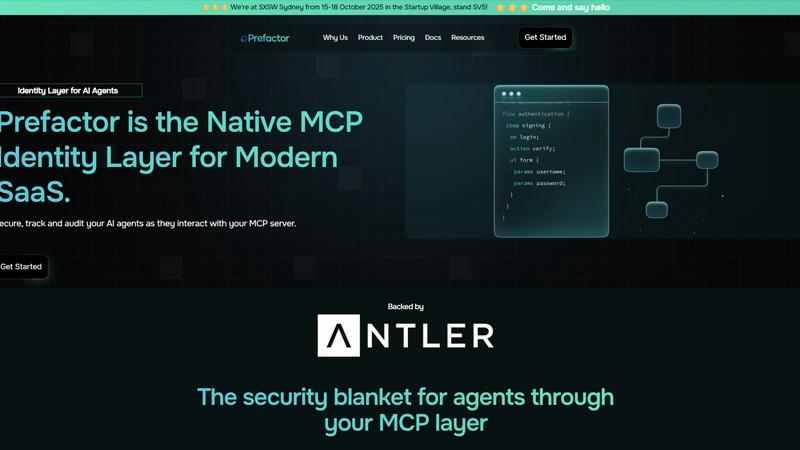
Prefactor
Stable Commerce
Feature Comparison
Prefactor
Real-Time Agent Monitoring
Prefactor enables organizations to track every agent's actions in real-time. This feature provides insights into which agents are active, what resources they are accessing, and where issues may arise, allowing teams to address potential incidents before they escalate.
Compliance-Ready Audit Trails
With Prefactor, audit logs are more than just technical records; they translate agent actions into understandable business contexts. This ensures that when compliance teams inquire about agent activities, stakeholders receive clear answers instead of cryptic API calls.
Identity-First Control
Every AI agent in Prefactor is assigned a unique identity, ensuring that all actions are authenticated and permissions are scoped. This feature extends governance principles typically applied to human users to AI agents, enhancing security and accountability.
Cost Tracking and Optimization
Organizations can monitor agent compute costs across different providers with Prefactor. This feature allows teams to identify expensive usage patterns, enabling them to optimize spending and improve cost efficiency across their AI deployments.
Stable Commerce
Prompt-to-Store Generator
This is the headline act. Describe your store concept in plain English, and Stable Commerce's AI engine builds a complete, mobile-responsive online storefront in under two minutes. No coding, no dragging and dropping templates, no confusing dashboards. Just articulate your vision, and the autonomous agent handles the technical heavy lifting, from design to basic structure, getting you from idea to live operation faster than ever thought possible.
Autonomous Commerce Agent
Think of this as your 24/7 e-commerce operations manager. This intelligent agent doesn't just set up your store; it orchestrates the entire backend stack. It automatically connects payment gateways (like Stripe and PayPal), integrates analytics, manages fulfillment APIs, and ensures all systems communicate seamlessly. It continuously monitors performance and executes optimizations in the background, turning a static store into a dynamic, self-improving business asset.
Unified E-Commerce Stack
Stable Commerce consolidates the entire fragmented toolkit into one powerful platform. It includes built-in inventory management across unlimited locations, order processing, customer service tools, and enterprise-grade security with SSL and fraud protection. This "everything and the kitchen sink" approach means you never need to hunt for, pay for, or integrate another third-party plugin again, ensuring stability and reducing points of failure.
Live Analytics & Optimization Engine
Move beyond static reports. The platform provides real-time visibility into sales, customer behavior, and operational metrics. More importantly, its AI doesn't just show you the data; it acts on it. The system automatically A/B tests elements, suggests pricing adjustments, and optimizes conversion paths to consistently boost performance and turn more visitors into buyers, all without requiring manual intervention or deep analytical expertise.
Use Cases
Prefactor
Regulated Industry Compliance
In industries like banking and healthcare, compliance is non-negotiable. Prefactor helps organizations maintain rigorous oversight of their AI agents, ensuring that they adhere to strict regulatory requirements and can withstand audits.
Enhanced Operational Visibility
Companies can leverage Prefactor to gain complete visibility into their agent infrastructure. This is particularly useful for teams that need to monitor agent performance and resource access in real-time, preventing failures before they occur.
Efficient Policy Management
With Prefactor's policy-as-code capabilities, organizations can automate the management of policies across their AI agents. This helps streamline operations, reduce errors, and ensure consistent compliance with organizational standards.
Cost Optimization Initiatives
Businesses using Prefactor can analyze and optimize their agent-related costs effectively. By understanding where expenses are incurred, they can make informed decisions on resource allocation, leading to enhanced financial performance.
Stable Commerce
The Aspiring Solopreneur
An individual with a product idea but zero technical or e-commerce experience can use Stable Commerce to bypass the traditional steep learning curve. By simply prompting the AI with their concept and importing a few products, they can launch a professional, secure store in minutes. This democratizes online retail, allowing creators and makers to focus on sourcing and marketing instead of wrestling with technology.
The Scaling DTC Brand
A growing direct-to-consumer brand drowning in app subscriptions and developer fees can migrate to Stable Commerce to consolidate its stack. The autonomous agent unifies their operations, automates repetitive optimization tasks, and provides real-time insights, freeing the small team to concentrate on brand building, customer acquisition, and product development instead of backend maintenance.
The E-commerce Agency
Agencies managing multiple client stores can leverage Stable Commerce's multi-store capabilities (especially in Pro and Agency plans) to deploy and manage standardized, high-performance storefronts at scale. The predictable infrastructure and automated workflows allow them to deliver better results faster, improve profit margins by reducing manual work, and offer a cutting-edge AI-powered service as a key differentiator.
The Marketplace Seller Expanding to Webstore
A successful seller on platforms like eBay or Etsy looking to build brand independence and higher margins can use Stable Commerce's import tools to instantly bring their existing inventory onto a dedicated store. The platform handles the technical setup, allowing the seller to quickly establish a direct sales channel with a professional presence, complete with integrated payments and analytics.
Overview
About Prefactor
Prefactor is the groundbreaking control plane crafted specifically for managing AI agents, revolutionizing how organizations oversee their AI systems. It offers a secure and auditable identity for every deployed agent, enabling firms to govern AI technologies at scale while ensuring compliance with industry regulations. Prefactor simplifies the complexities of agent authentication through dynamic client registration and fine-grained role and attribute controls. With its innovative policy-as-code framework, organizations can automate policy management within CI/CD pipelines, enhancing efficiency and compliance. Equipped with comprehensive visibility into agent actions, Prefactor is particularly suited for SaaS companies and regulated industries such as banking, healthcare, and mining. By transforming the intricate landscape of agent authentication into a streamlined framework, Prefactor not only accelerates deployment but also fosters confidence in AI technologies.
About Stable Commerce
Forget everything you know about clunky, complex eCommerce platforms. Stable Commerce is the AI-native infrastructure that's completely redefining the game. This isn't just another Shopify alternative with a plugin slapped on; it's a ground-up, autonomous eComOps framework built for the age of AI. Designed for everyone from first-time entrepreneurs to scaling professionals, Stable Commerce turns a simple idea into a fully operational online store with a single prompt. Its core value proposition is radical simplicity and unprecedented automation. The platform leverages a proprietary autonomous agent that acts as your tireless digital employee, handling everything from storefront creation and system integrations to real-time analytics and continuous optimization. By eliminating the need for a patchwork of apps, developers, and manual workflows, Stable Commerce slashes overhead, accelerates launch times to under two minutes, and empowers you to focus purely on strategy and growth. It's not just a tool; it's your mechanical maestro for the entire e-commerce orchestra.
Frequently Asked Questions
Prefactor FAQ
What types of organizations can benefit from Prefactor?
Prefactor is ideal for organizations in regulated industries such as banking, healthcare, and mining, as well as SaaS companies looking to manage AI agents efficiently and securely.
How does Prefactor ensure compliance with industry regulations?
Prefactor provides comprehensive audit trails and real-time monitoring, ensuring that all agent activities are documented and easily accessible for compliance reviews.
Can Prefactor integrate with existing tools and frameworks?
Yes, Prefactor is designed to work seamlessly with various frameworks such as LangChain, CrewAI, and AutoGen, allowing for quick deployment within existing infrastructures.
How does Prefactor improve visibility into agent actions?
With its control plane dashboard, Prefactor offers real-time visibility into agent activities, enabling organizations to track performance and identify issues proactively before they escalate into significant problems.
Stable Commerce FAQ
How does the "prompt-to-store" feature actually work?
You provide a natural language description of what you want to sell (e.g., "an online store selling eco-friendly yoga mats and accessories"). Stable Commerce's AI interprets this prompt, selects an appropriate design theme, structures product categories, sets up essential pages (Home, About, Contact), and pre-configures core settings like taxes and shipping regions. You then import your specific products to populate this generated framework.
What does the Autonomous Agent do on an ongoing basis?
After launch, the agent operates continuously in the background. It monitors store performance and sales data, manages inventory sync across channels, ensures all connected services (payments, analytics, fulfillment) are running smoothly, and executes automated optimization routines. This can include tweaking site elements for better conversion, generating performance reports, and alerting you to significant trends or issues.
Can I connect my own custom domain?
Yes. While the Free plan provides a Stable Commerce subdomain, the Basic plan and above include the ability to connect one or more custom domains (e.g., www.yourbrand.com). This is a standard feature for establishing a professional brand identity and is integrated seamlessly through the platform's settings.
What is the "success fee" mentioned in the pricing?
Stable Commerce employs a hybrid pricing model. On top of any monthly subscription fee, a small percentage (the success fee) is applied to your sales revenue. This aligns the platform's incentives with your growth; they succeed only when you do. The fee decreases as you move to higher-tier plans (e.g., from 3% on Free to 0.5% on Pro), rewarding scale with better rates.
Alternatives
Prefactor Alternatives
Prefactor is an advanced control plane designed for managing AI agents within regulated industries, enabling organizations to maintain compliance and security with ease. As businesses increasingly adopt AI technologies, users often seek alternatives to Prefactor to explore different pricing options, feature sets, or compatibility with specific platforms that better align with their operational needs. When evaluating alternatives, it's vital to consider factors such as real-time monitoring capabilities, compliance features, and the overall security framework to ensure that the chosen solution meets industry standards and supports scalable governance.
Stable Commerce Alternatives
Stable Commerce is an AI-native eCommerce and automation platform designed to launch and manage online stores with unprecedented speed. It promises to handle everything from initial setup to ongoing optimization, making it a compelling choice for entrepreneurs seeking a frictionless start. Users often explore alternatives for several key reasons. Pricing structures and specific feature needs, like advanced inventory management or deeper platform integrations, can drive the search. Some businesses may require more granular control over their store's design or backend processes than an ultra-automated solution provides, while others might prioritize established ecosystems with vast app marketplaces. When evaluating other platforms, focus on the core trade-off between automation and control. Consider the total cost of ownership, including transaction fees and any required add-ons. Scalability is crucial—will the platform grow with your sales volume and complexity? Finally, assess the learning curve and the quality of support, as these factors significantly impact long-term operational efficiency.